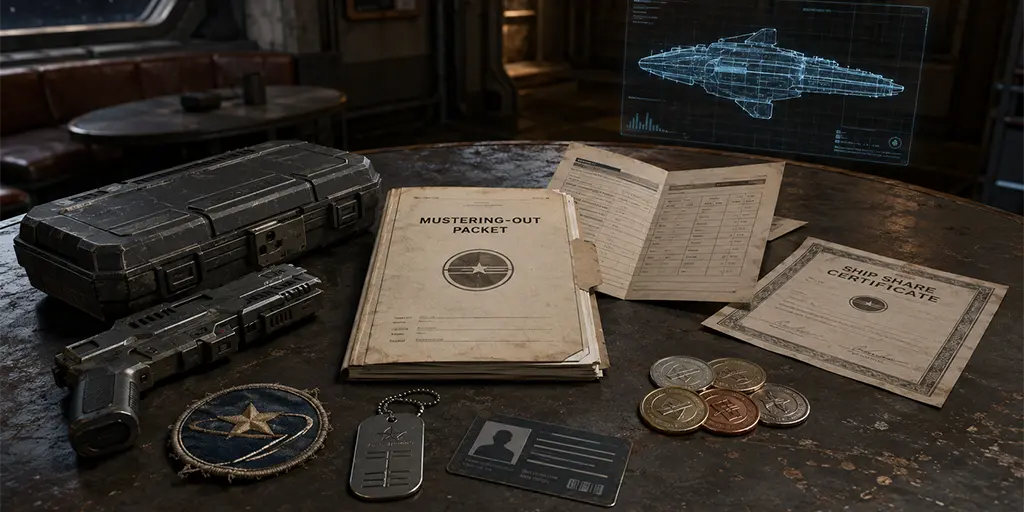
Mustering-out benefits are where your Traveller character’s career history becomes cash, contacts, ship shares, gear, status, and story fuel for the campaign.
Mustering-out benefits determine what your Traveller brings from character creation into the campaign. Cash provides flexibility, equipment creates immediate capabilities, contacts connect the character to the setting, and ship shares can influence the direction of the entire crew.
This guide explains how mustering-out benefits work, how to weigh cash against material rewards, and how to turn each result into equipment, relationships, obligations, and adventure hooks.
Mongoose Traveller Mustering-Out Benefits Explained
In Mongoose Traveller character creation, mustering-out benefits are the rewards your character receives after leaving a career. They represent savings, equipment, favors, contacts, ship shares, professional memberships, and other resources earned during years of service.
This is one of the most important parts of character creation because it turns your career path into the starting position for play.
This article is part of the Traveller character creation learning path. Start with the Traveller Character Creation Guide if you want the full lifepath overview.
For the full official benefit tables, use the Traveller Core Rulebook Update 2022 or the Traveller Explorer’s Edition.
Traveller Character Creation Path
Mustering-out benefits make the most sense when you understand the whole Traveller lifepath process:
- Traveller Character Creation Guide
- Rolling Characteristics
- Background Skills
- Traveller Careers Explained
- What To Do When Traveller Character Creation Gives You the Wrong Career
What Are Mustering-Out Benefits?
Mustering-out benefits are the resources a Traveller gains when leaving a career during character creation. In plain language, they are what your character has to show for their years of work before the campaign begins.
Depending on the career and events in the character’s history, the character may leave service with cash, equipment, characteristic improvements, memberships, ship-related benefits, contacts, allies, or other resources.
The important thing to remember is that mustering-out benefits are not just mechanical rewards. They are also clues about who your Traveller is, what they did before the campaign, and what kinds of opportunities or complications might follow them into play.
What Mustering-Out Benefits Mean in Play
Mustering-out benefits are not just rewards for surviving character creation. They help define what your Traveller can do when the campaign begins.
Cash gives the character flexibility. Gear gives them immediate options. Contacts and allies connect them to the setting. Ship shares can shape the entire campaign. Memberships and pensions create access, reputation, obligations, and people who still remember the character.
When you receive a benefit, ask what it means at the table:
- Cash: What problem can this solve before the first session?
- Gear: What does this equipment let the character do that others cannot?
- Contacts: Who can the character call when they need help?
- Allies: Who cares enough to take risks for this character?
- Ship shares: How does this affect the group’s access to a ship?
- Memberships: What doors does this open?
- Pensions: Who still knows this character’s name?
The best mustering-out benefits are the ones that create choices, relationships, and complications once play begins.
How Many Mustering-Out Benefits Do You Get?
A character’s number of mustering-out benefit rolls is usually based on completed career terms, with some careers or ranks providing additional benefits. Check the applicable career table because rank, mishaps, forced departure, and other results can affect the final total.
Leaving a career early can also change what the character receives. Injuries, mishaps, or forced departure may affect both the character’s history and the resources available when play begins.
Cash Benefits Versus Material Benefits
Most careers give you a choice between cash benefits and material benefits. Cash is flexible. Material benefits are more specific, but they can be far more interesting.
| Benefit Type | Best For | Campaign Use |
|---|---|---|
| Cash | Starting funds, equipment, debt reduction | Gives the player flexibility before the campaign begins. |
| Gear | Armor, weapons, tools, vehicles | Defines what the character can do immediately. |
| Social benefits | Contacts, allies, memberships, SOC gains | Creates access, favors, patrons, and trouble. |
| Ship benefits | Ship shares, ship access, ownership support | Can shape the entire campaign premise. |
Cash is easy to value because it remains flexible, but non-cash benefits can create access, capabilities, and campaign opportunities that money alone may not provide. A contact can open a door. A ship share can change the crew’s future. A membership can solve a problem at exactly the right time.
Common Mustering-Out Benefit Categories
Armor
Military, law enforcement, and security careers may grant armor as a mustering-out benefit. This gives the character a practical advantage in dangerous situations and also says something about their past. A former Marine with combat armor is not just well-equipped; they look like someone who has been through serious service.
Weapons
Some careers provide weapons as benefits. These usually fit the character’s background, such as military weapons for soldiers, blades for certain martial careers, or firearms for law enforcement. Referees should treat these as more than equipment. A weapon may be standard issue, a trophy, a family item, or something the character was not supposed to keep.
Cash
Cash benefits represent savings, severance, retirement funds, sale of assets, or other money accumulated during a career. Cash is especially useful if the group starts without a ship or needs to buy basic equipment before the first session.
Characteristic Increases
Some benefits improve characteristics such as EDU, INT, SOC, DEX, or END. These are simple on paper but important in play. EDU can represent advanced training, INT can reflect sharper instincts or professional experience, and SOC may indicate reputation, status, or noble connections.
Equipment
Scientific tools, technical kits, medical gear, and other professional equipment help define what the character can contribute to the crew. A Scholar with lab equipment, an Engineer with specialist tools, or a Scout with survey gear immediately has a role in the campaign.
Augments
Some careers may provide cybernetic or biological augmentations. These benefits can push a character beyond normal human limits or give them new abilities. Referees should ask where the augment came from, who paid for it, and whether anyone still expects something in return.
Contacts and Allies
Contacts and allies are among the most useful mustering-out benefits because they create living connections to the setting. A contact might provide information. An ally might take real risks to help. Either one can become a recurring NPC, mission source, patron, rival, or problem.
If you want to turn those results into stronger campaign material, the Sci-Fi Character Background Generator can help transform career events, benefits, contacts, and complications into playable character history.
Benefits as Character Hooks
Every mustering-out benefit can become a character hook.
Instead of asking only “what did I get?” ask “why do I have this, who knows about it, and what might it cost me later?”
- Cash: Was it saved honestly, inherited, won, stolen, or paid as severance?
- Armor: Is it legal to wear here, and does it identify a former service branch?
- Weapon: Is it registered, restricted, sentimental, stolen, or recognizable?
- Contact: What favor does this person still owe, and what might they ask in return?
- Ally: Why are they loyal, and what danger could threaten them?
- Membership: What privileges does it grant, and what obligations come with it?
- Ship share: Who else has a claim on the ship, loan, or ownership arrangement?
This is where Traveller character creation starts becoming campaign material.
Ship Shares and Starship Benefits
Ship shares are one of the most campaign-shaping mustering-out benefits in Traveller. A ship share represents partial value toward a starship, usually through investment, ownership, service credit, or support from people connected to the character’s career.
Ship shares are not normally treated as cash. They are value connected to a ship or ship-owning arrangement. This distinction matters because it prevents ship shares from becoming simple money while still letting them influence the campaign’s starting position.
A group with enough ship shares may reduce the cost of a ship, change the mortgage situation, or explain why the party has access to a vessel. A character with scout service history may have access to a scout ship on detached duty, but that access can come with expectations, obligations, and future missions.
For ship-focused campaigns, pair this article with the Traveller Ship Mortgage Calculator, the Traveller RPG Ship Travel Time Calculator, and the Far Trader Illustrated Deck Plans.
Travellers’ Aid Society and Membership Benefits
Some mustering-out benefits grant membership in important organizations, such as the Travellers’ Aid Society. Membership benefits are easy to underestimate because they do not always look as exciting as armor, weapons, or a starship.
In play, membership can be extremely useful. It can provide travel support, access to facilities, introductions, information, credibility, or social leverage. A character with the right membership may be able to get into places that a heavily armed mercenary cannot.
For referees, membership benefits are also useful story tools. A society, guild, corporation, navy, university, or old service branch can ask for favors, provide warnings, deliver patrons, or call in old obligations.
Pensions and Long Careers
Characters who spend a long time in a single career may qualify for a pension. A pension is more than passive income. It says the character survived long enough to become a known quantity in their profession.
A pensioned character might have a service record, reputation, former subordinates, old enemies, and institutional connections. That can be valuable in a campaign, but it can also pull the character back into old business.
When a player receives a pension, ask one useful question: who still remembers this character? The answer can create a patron, rival, former commanding officer, corporate handler, political connection, or family obligation.
How Mustering-Out Benefits Shape Your Character
Mustering-out benefits should help answer three questions about your Traveller:
- What did this character gain? Money, gear, status, allies, a ship share, or professional access.
- What did this character lose? Time, health, trust, freedom, innocence, or a former career.
- Who is still connected to this character? Contacts, allies, rivals, patrons, enemies, or institutions.
This is why mustering-out is not just the end of character creation. It is the bridge between character creation and the first session. The benefits show what your character brings to the table, and the story behind those benefits gives the referee something to use.
If you are still learning the basics of Traveller, download the free Intro to Traveller PDF for a broader beginner-friendly overview.
Referee Tips for Using Mustering-Out Benefits
Referees should review every player’s mustering-out benefits before the first session. Look for anything that can become a useful campaign hook.
- Cash can attract thieves, creditors, investors, or desperate relatives.
- Contacts can become information sources, patrons, or people in trouble.
- Allies can ask for help when the crew least expects it.
- Ship shares can explain ownership disputes, loan terms, or business partners.
- Memberships can create access to restricted locations or elite networks.
- Weapons and armor can imply old conflicts, military history, or legal complications.
A good Traveller campaign often begins when the referee turns a character creation result into a problem, opportunity, or relationship. Mustering-out benefits are full of those seeds.
Quick Player Checklist
Before you finish character creation, review your mustering-out benefits and answer these questions:
- Which benefit is most useful in play?
- Which benefit says the most about your character’s past?
- Which benefit creates a connection to another person or organization?
- Which benefit might cause trouble later?
- Which benefit helps explain why your character joins the group?
Once you answer those questions, your benefits become more than a list of rewards. They become the foundation for your character’s place in the campaign.
Related Traveller Character Creation Resources
Continue through the lifepath with the core guides most relevant to mustering-out benefits.
Frequently Asked Questions
How Many Mustering-Out Benefits Does a Traveller Receive?
The number depends on completed career terms, rank, career rules, and how the character leaves service. Check the applicable career table before making benefit rolls.
Should I Choose Cash or Material Benefits?
Choose cash when the character needs flexibility or starting funds. Choose material benefits when equipment, contacts, memberships, characteristic increases, or ship shares better support the character and campaign.
Can Ship Shares Be Taken as Cash?
Ship shares normally represent value connected to a starship or ownership arrangement rather than ordinary spending money. Use the applicable rules and campaign setup to determine how they affect ship access or financing.
What Happens to Benefits From an Unfinished Career Term?
A character generally receives benefits for completed terms. Injuries, mishaps, or forced departure can affect whether the current term produces a benefit, so check the career rules for the exact result.
How Can Referees Use Mustering-Out Benefits?
Turn benefits into relationships and consequences. Contacts can request favors, equipment may have a history, memberships can create obligations, and ship shares may introduce lenders, partners, or ownership disputes.
Are Contacts and Allies the Same?
No. A contact may provide information or limited assistance, while an ally is generally willing to take greater risks for the character. Define the relationship during character creation so it can support play.
Get More Traveller Character Creation Help
Get practical guidance for Traveller careers, mustering-out benefits, contacts, ship shares, lifepath events, and character development.
No spam. Just character creation tips, career guides, lifepath resources, and CyborgPrime updates. Unsubscribe anytime.