
Learn how to play Mongoose Traveller Second Edition with a beginner-friendly guide to the basic rules, character creation, first sessions, starter books, and what makes Traveller different from fantasy RPGs.
Mongoose Traveller Second Edition is a science-fiction tabletop roleplaying game about capable people trying to survive, earn money, solve problems, and make hard choices in a dangerous universe. Instead of starting as a young fantasy hero at level one, your Traveller usually begins play as an adult with a career, history, skills, contacts, rivals, scars, and maybe even a ship that still needs to be paid off.
If you are new to Traveller, the game can look more complicated than it really is. There are many books, many editions, and plenty of science-fiction terminology. The good news is that you do not need to master all of that before your first session. To start playing Mongoose Traveller, you only need to understand a few core ideas: roll 2D6, use skills, pay attention to Effect, create characters through lifepath careers, and begin with a small mission where choices have consequences.
This guide is written for new players, first-time referees, and Dungeons & Dragons players who want to understand how Traveller works before they jump into a campaign. For a broader overview of the game, you may also want to read The Ultimate Guide to Playing Mongoose Traveller RPG.
What Is Mongoose Traveller Second Edition?
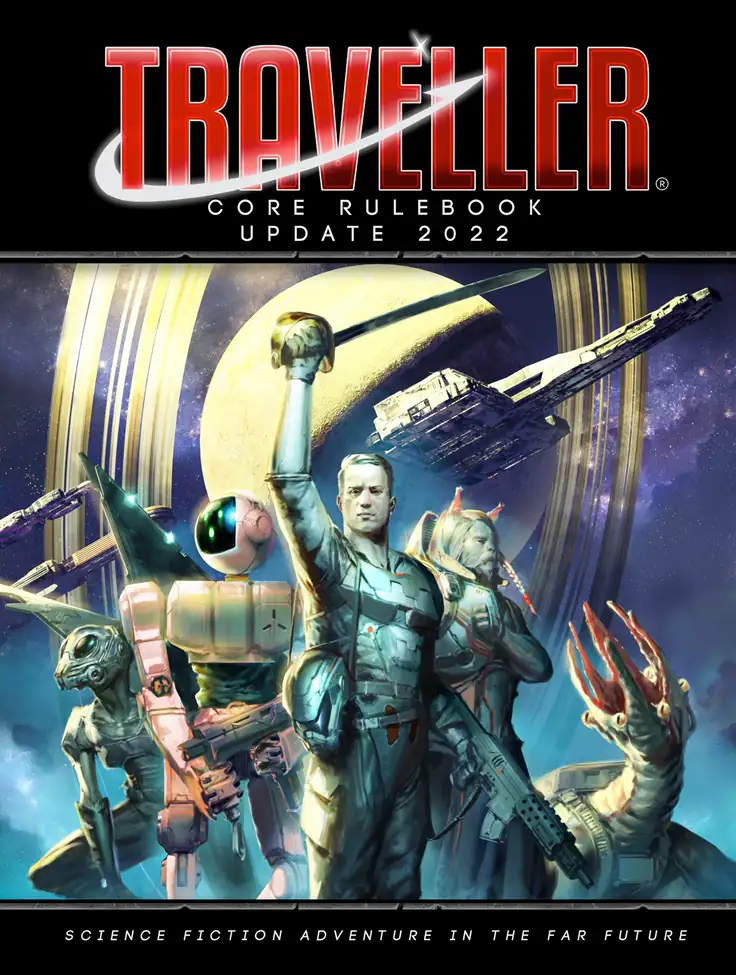
Mongoose Traveller Second Edition is the current modern version of the classic Traveller roleplaying game published by Mongoose Publishing. The most useful beginner baseline is the Traveller Core Rulebook Update 2022, because it is the central rulebook for the current Mongoose Traveller line.
Traveller is a 2D6 science-fiction RPG. The players create characters called Travellers, form a crew, take jobs, explore worlds, deal with patrons, survive danger, and try to make their way across the stars. A campaign might follow a free trader crew hauling speculative cargo, a scout team surveying unknown systems, a group of ex-military contractors, a salvage crew, or a band of troubleshooters who keep getting pulled into dangerous situations.
The most important thing to understand is that Traveller is often a sandbox game. That means the players usually have more freedom to choose where they go, which jobs they accept, who they trust, and what risks they take. The referee creates the universe, opportunities, factions, complications, and consequences. The players decide what their crew does next.
The Basic Rule: Roll 2D6 and Aim for 8+
The core mechanic in Traveller is simple. When your character attempts something risky or uncertain, roll 2D6, add the relevant skill, add a characteristic modifier if appropriate, and try to meet or beat a target number.
Most ordinary tasks are Average 8+. That means a total of 8 or higher succeeds. Easier tasks may need a 6+ or 4+. Harder tasks may need a 10+, 12+, or more.
For example, if your Traveller tries to repair a damaged airlock panel, the referee might ask for a Mechanic or Electronics check. You roll 2D6, add the skill, add a useful characteristic modifier, and compare the result to the target number.
The next important idea is Effect. Effect is how much you succeed or fail by. If the target number is 8 and you roll an 11, your Effect is +3. If you roll a 6, your Effect is -2.
Effect matters because Traveller is not always just pass or fail. A high Effect may mean you complete the job faster, do more damage, gain better information, or set up another character for success. A low or negative Effect may mean you succeed with a cost, fail narrowly, lose time, attract attention, or make the situation worse.
Here is the basic process:
- The player says what their character is trying to do.
- The referee chooses the most relevant skill and characteristic.
- The referee sets the difficulty.
- The player rolls 2D6 and adds modifiers.
- The group compares the total to the target number.
- The referee uses Effect to judge how well or badly things go.
That simple loop handles most of the game.
How Traveller Characters Work
Traveller character creation is one of the game’s most famous features. Instead of picking a class and starting fresh, you create a character through a lifepath.
Your Traveller begins with six characteristics: Strength, Dexterity, Endurance, Intellect, Education, and Social Standing. Then the character gains background skills and enters one or more careers. Each career term represents four years of life before the campaign begins.
During character creation, your Traveller might serve in the navy, join the scouts, become a merchant, study as a scholar, work as an agent, drift between ports, enter the marines, or survive on the edge of society. Along the way, they gain skills, make survival rolls, experience life events, earn promotions, suffer mishaps, make enemies, find allies, and eventually leave that life behind to become an adventuring Traveller.
This means Traveller characters usually begin play with history. They are not blank slates. A character might be a retired scout with a ship share, a former marine looking for work, a merchant with debts, a disgraced noble, a scientist with dangerous research, or an ex-agent who knows too much.
If you want a deeper walkthrough, start with How To Play Traveller: Traveller RPG Character Creation. For help choosing useful starting skills, see Traveller Character Creation: Best Background Skills. For more on careers, read Mongoose Traveller Character Creation: Careers.
The Connections Rule: Start as a Crew, Not Strangers
One of the best tools for new Traveller groups is the connections rule. During character creation, players can connect their Travellers through shared events. Maybe two characters served on the same ship. Maybe one saved another during a disaster. Maybe they met during a failed trade deal, a military operation, a corporate scandal, or a rescue mission.
This is extremely useful because it answers one of the biggest first-session questions: why are these people working together?
Instead of starting as random strangers at a starport, the group begins with shared history. The Travellers may trust each other, owe each other, resent each other, or know secrets about each other. That gives the referee instant material for patrons, rivals, complications, and future story hooks.
Good connection questions include:
- Which Traveller helped you survive a crisis?
- Which Traveller knows one of your secrets?
- Which Traveller once cost you money, rank, or reputation?
- Which Traveller did you serve with before the campaign began?
- Which Traveller do you trust more than you admit?
If your group is new to Traveller, use connections. They turn character creation into party creation.
What Do You Need to Start Playing Traveller?
You do not need every Traveller book to begin. In fact, new groups are usually better off starting with fewer books and a smaller campaign idea.
The cheapest beginner path
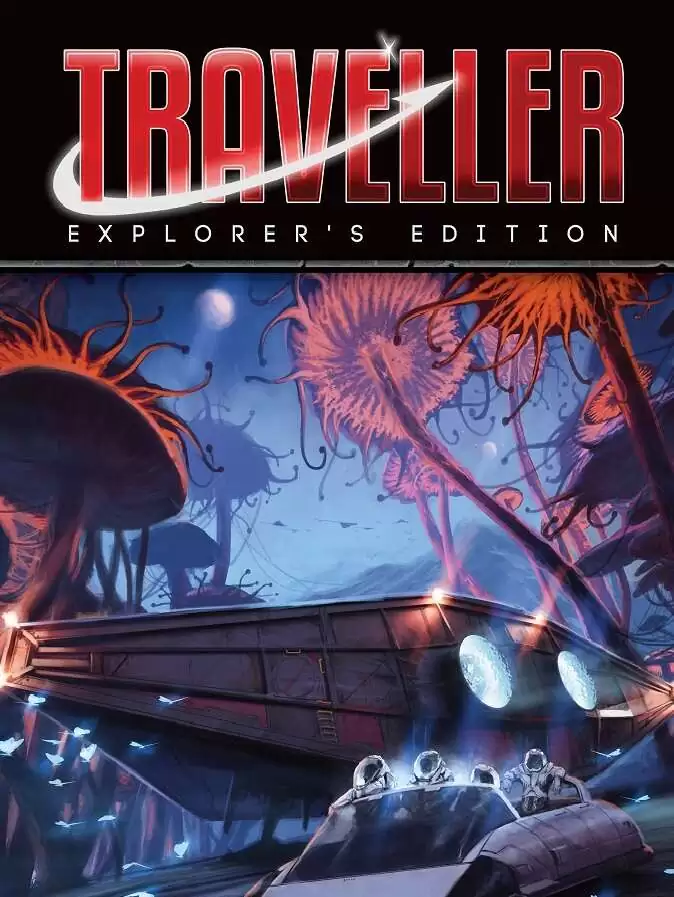
If you want the lowest-cost way to try the game, start with the Traveller Explorer’s Edition or the official starter material. These options are designed to introduce the system without requiring you to buy the whole product line first.
The best full starting book
If you want the main rulebook, start with the Traveller Core Rulebook Update 2022. This is the best single book for most new players and referees because it contains the full foundation for characters, skills, combat, equipment, vehicles, spacecraft, trade, worlds, and campaign play.
Useful books after the core rules
Once your group knows it likes Traveller, you can add more books based on what your campaign needs.
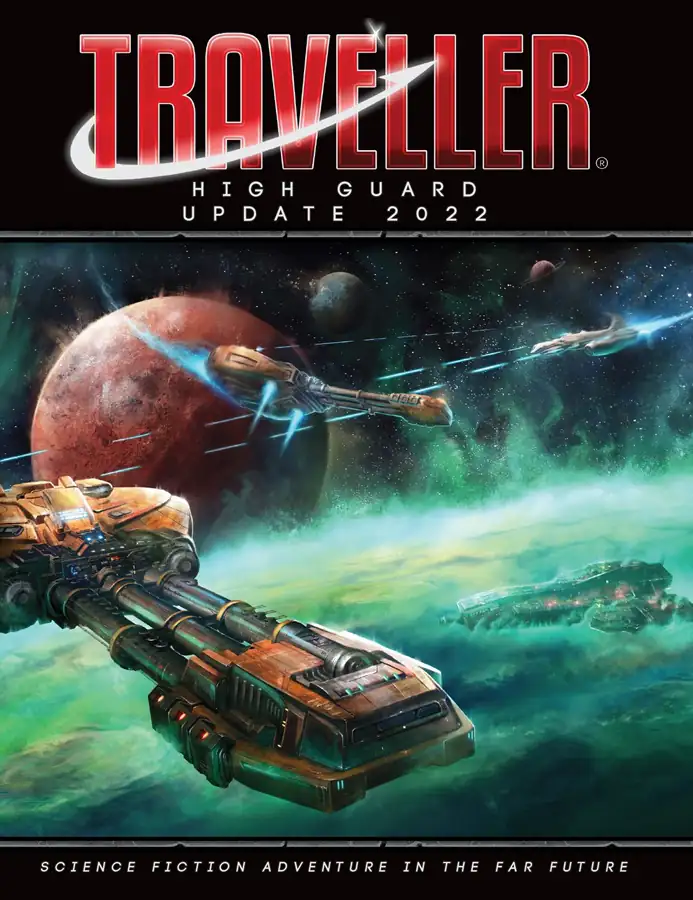
- High Guard Update 2022 is useful if your group wants more starship design, ship options, and spacecraft operations.
- Central Supply Catalogue Update 2023 is useful if your players want more weapons, armor, gear, tools, vehicles, and equipment choices.
- Traveller Companion Update 2024 is useful if the referee wants optional rules and alternate campaign tools.
Do not feel pressured to buy everything before playing. Beginners do not need a shelf full of supplements. They need characters, a crew concept, a job, and a problem worth solving.
How a First Traveller Session Should Work
The best first Traveller session is a tutorial mission disguised as a real job. Do not start by explaining every rule. Start with a situation the crew can understand.
A good first mission might be:
- Inspect a silent relay station.
- Recover a damaged survey probe.
- Escort a suspicious cargo shipment.
- Rescue a stranded scout crew.
- Investigate a missing passenger at a starport.
- Deliver medical supplies before a local crisis gets worse.
- Retrieve a data core from a derelict shuttle.
Each of these missions gives players something clear to do. They also create natural chances to use the rules without overwhelming the table.
A strong first session should include:
- A crew concept. Decide whether the characters are scouts, traders, troubleshooters, mercenaries, researchers, or something else.
- A patron or problem. Give the crew a person, organization, or crisis that offers the job.
- A social scene. Let someone negotiate, investigate, persuade, or read between the lines.
- A technical scene. Let someone repair, scan, pilot, hack, analyze, or operate equipment.
- A dangerous scene. Introduce pressure, risk, time limits, hostile conditions, or a difficult choice.
- A short action scene. Use a brief combat, chase, escape, or standoff if the situation calls for it.
- A consequence. Pay the crew, injure them, give them a contact, reveal a rival, or create the next problem.
This teaches Traveller naturally. The players learn the rules because the rules appear in play.
Optional Referee Toolkit: NPCs, Names, and Ship Trouble
If you are preparing your first Mongoose Traveller or sci-fi RPG session, it helps to have quick table-ready material for the moments when players talk to an unexpected NPC, inspect a damaged ship, or need a contact at the starport.
The Sci-Fi RPG Starter Pack bundles ready-to-use NPCs, modern name generators, and starship complications for busy referees.
Use it to create marines, merchants, contacts, rivals, crew members, and believable ship problems without stopping the game.
Good First Adventures for Mongoose Traveller
For a first Mongoose Traveller adventure, choose something small and focused. Avoid beginning with a giant political campaign, a huge war, or a mystery that requires deep setting knowledge. Start with one job and one twist.
Good beginner adventures often involve a starport, a patron, a ship, a damaged facility, a missing person, a dangerous cargo, or a situation where the truth is not exactly what the players were told.
Several Mongoose Traveller starter adventures and introductory products fit this style:

Referees who want extra adventure seeds can also use CyborgPrime’s 36 Sci-Fi RPG Adventure Hooks as a prep shortcut.
What Do Players Actually Do in Traveller?
New players often ask, “What are we supposed to do?” That is a normal question, especially for players coming from fantasy campaigns built around quests, dungeons, monsters, and villains.
In Traveller, what you do depends on the campaign frame. Your crew might:
- Haul cargo between worlds and try to turn a profit.
- Explore unknown systems and survey strange planets.
- Work for patrons who need discreet problem-solvers.
- Investigate mysteries at starports, colonies, or research stations.
- Serve in a naval, scout, mercenary, or intelligence campaign.
- Run salvage operations in dangerous space.
- Build a trade network or business empire.
- Keep an aging ship flying one more month.
That last point is very Traveller. A starship is not just transportation. It can be a home, workplace, debt, opportunity, status symbol, and constant problem generator.
If your campaign involves ship payments, trade, or speculative cargo, CyborgPrime’s Traveller Ships Mortgage Calculator and Building a Business Empire: A Guide to Trade and Commerce In Mongoose Traveller RPG can help players and referees understand the economic side of play.
Why Combat Feels Different in Traveller
Traveller combat can be dangerous. Characters are competent, but they are not superheroes. Damage can hurt quickly, and a bad fight can leave someone unconscious, seriously wounded, or dead.
This does not mean combat should never happen. It means players should think like people in a dangerous science-fiction universe. Cover matters. Armor matters. Tactics matter. Surprise matters. Talking your way out of a fight may be smarter than drawing a weapon.
For D&D players, this is one of the biggest mindset shifts. In many fantasy games, combat is often expected and survivable. In Traveller, a firefight is a serious decision. A veteran marine is dangerous because of training, weapons, armor, and discipline, not because the rules make them immune to bullets.
The beginner rule of thumb is simple: negotiate first, use cover second, and only force a fight when the objective is worth the risk.
How Traveller Differs from Dungeons & Dragons
Traveller and Dungeons & Dragons are both tabletop roleplaying games, but they reward different habits.
In D&D, characters often grow from fragile adventurers into powerful heroes through levels, class abilities, magic items, and increasing hit points. In Traveller, characters usually begin as experienced adults. They can improve, but the campaign is less about climbing a power ladder and more about making smart choices in a dangerous universe.
Here are the biggest differences:
- No classes in the usual fantasy sense. Careers describe what your character did before play, but they do not lock your future.
- No level-based power curve. Traveller advancement is usually slower and more grounded.
- Skills matter more than builds. What your character knows how to do is central to play.
- Combat is risky. Avoiding a fight can be a victory.
- The campaign is often player-directed. The crew chooses jobs, routes, allies, risks, and goals.
- Money matters. Fuel, repairs, cargo, debt, bribes, medical care, and ship payments can all drive adventure.
If you are coming from D&D, do not start by asking, “What is the best build?” Instead ask, “Who is this person, what happened to them, and why are they willing to risk their life aboard this ship?”
Common Beginner Mistakes
The first common mistake is buying too many books before playing. The core rules or starter materials are enough to begin. Add more supplements when your campaign actually needs them.
The second mistake is over-preparing the setting. You do not need to understand every sector, empire, alien species, and timeline detail before session one. Start with one ship, one world, one patron, and one problem.
The third mistake is skipping character connections. Traveller works better when the crew has shared history. Use the connections rule to give the group reasons to trust, owe, need, or tolerate each other.
The fourth mistake is treating combat like a heroic fantasy brawl. Traveller firefights can turn ugly fast. Encourage players to plan, scout, negotiate, use cover, and think before they pull weapons.
The fifth mistake is making the first adventure too big. A small job with one strong twist is better than a giant plot with ten factions. Let the universe grow after the players understand the basics.
Five Rules to Remember
If you only remember five things after reading this guide, remember these:
- Most checks are 8+. Roll 2D6, add skills and modifiers, and aim for the target number.
- Effect matters. The margin of success or failure helps shape the result.
- Lifepath character creation creates story. Your Traveller’s past gives the campaign fuel.
- Cover beats bravado. Traveller combat rewards caution and tactics.
- Every crew member should have a role. Starship scenes work best when everyone has something useful to do.
Final Thoughts: Start Small and Let the Universe Grow
Mongoose Traveller Second Edition works best when the group starts with clear basics and lets the campaign expand through play. You do not need to memorize every rule, understand every starship system, or own every supplement before your first session.
Start with the core mechanic. Create Travellers with interesting histories. Give them a small job. Put pressure on them. Let their choices matter.
That is the heart of Traveller.
Once your group understands that, the universe can grow one jump at a time.
Related CyborgPrime resources:
- The Ultimate Guide to Playing Mongoose Traveller RPG
- How To Play Traveller: Traveller RPG Character Creation
- Traveller Character Creation: Best Background Skills
- Mongoose Traveller Character Creation: Careers
- Traveller Ships Mortgage Calculator
- Building a Business Empire: A Guide to Trade and Commerce In Mongoose Traveller RPG