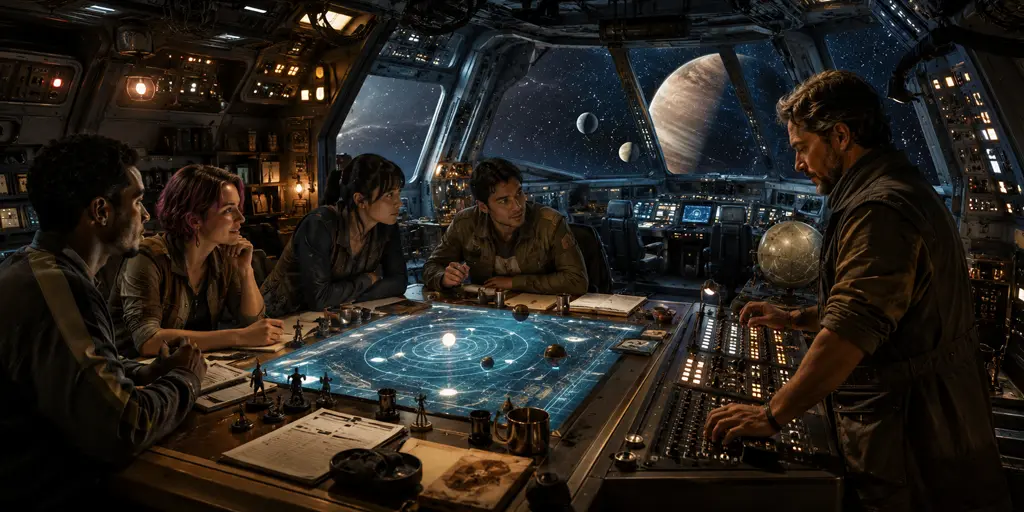
Build a better sci-fi RPG music playlist by matching each track to the scene, keeping the volume low, and choosing music that supports play instead of competing with it.
Background music can make a starship feel immense, a crowded port feel alive, or an abandoned station feel dangerously empty. It can also make a session harder to follow when the volume is too high, the lyrics compete with dialogue, or the referee spends too much time searching for the next track.
This guide focuses on practical table use. You will learn how to match music to common sci-fi scenes, choose genres for different moods, organize a small set of dependable playlists, and decide when silence will work better than another song.
You do not need a huge music library. A few well-tested tracks for travel, exploration, social scenes, danger, combat, and aftermath will cover most sessions.
How to Use Sci-Fi RPG Music Without Distracting the Table
The best sci-fi RPG music does not need to be loud, famous, or perfectly “space themed.” It needs to reinforce the scene while leaving room for conversation, decisions, and description.
Start with three practical rules:
- Keep the volume below normal speaking level. Players should never need to talk over the soundtrack.
- Choose music for the current activity. Exploration, negotiation, combat, and downtime usually need different energy levels.
- Avoid abrupt changes unless the scene changes too. A sudden musical shift can signal danger, discovery, or escalation, but constant switching becomes distracting.
Instrumental tracks are often the easiest choice because lyrics can compete with dialogue. Vocals can still work well in bars, festivals, alien broadcasts, religious ceremonies, and other scenes where the music is part of the setting.
Choose Music by Scene, Not Just by Genre
This quick reference helps you select a musical direction based on what the characters are doing.
| Scene | Useful Sound | Why It Works |
|---|---|---|
| Deep-space travel | Ambient synth, slow electronic music | Creates scale and distance without demanding attention. |
| Exploration | Cosmic rock, evolving soundscapes | Adds momentum while preserving a sense of mystery. |
| Urban intrigue | Jazz, downtempo electronica, synthpop | Suggests nightlife, surveillance, and social tension. |
| Combat or pursuit | Heavy instrumental rock, driving electronic music | Raises energy without requiring a faster rules pace. |
| Alien culture | World music, unusual vocals, unfamiliar rhythms | Makes a location feel culturally distinct. |
| Horror or derelicts | Sparse drones, restrained film scores | Builds tension while leaving silence available. |
Use these categories as starting points rather than rules. A cheerful song during a dangerous scene can create irony, while near-silence can be more effective than any soundtrack.
Ambient Electronic Music for Space Travel
Ambient electronic music is the most flexible foundation for a sci-fi RPG playlist. Long textures, gradual changes, and limited vocals make it suitable for travel, mapping, research, and quiet shipboard scenes.
Tangerine Dream, Jean Michel Jarre, and Vangelis provide useful starting points for expansive electronic sound. For a game-specific example, try this long EVE Online ambient music collection.
This style works best when characters are crossing large distances, examining sensor data, or approaching an unknown world. It is less effective when the scene needs sharp rhythmic urgency.
Cosmic Rock and Instrumental Metal for Momentum
When a session needs more motion, cosmic rock and instrumental metal can add energy without filling the table with lyrics.
Ozric Tentacles is a strong example of instrumental space rock built around synths, bass, guitar, and changing rhythms. Instrumental metal can support ship combat, dangerous engineering work, chases, or military operations.
Use heavier music selectively. If every scene has the same intensity, the soundtrack stops communicating escalation. Save the most forceful tracks for moments when the characters commit to action or the situation becomes harder to reverse.
Synthpop, Techno, and Electronic Music for Future Cities
Electronic pop and dance music are useful for starports, casinos, arcologies, corporate districts, vehicle scenes, and crowded public spaces. Repetition can help create a steady sense of place, especially when the music is presented as something the characters can actually hear.
Kraftwerk is a useful reference point for clean electronic rhythm and machine-like atmosphere. Similar sounds can make a setting feel ordered, automated, commercial, or slightly impersonal.
Lyrics are less of a problem when the music is diegetic: a nightclub track, station announcement, commercial jingle, or local broadcast. In those cases, the soundtrack becomes part of the world rather than a layer placed over it.
Jazz and World Music for Distinctive Locations
Jazz can give a scene a noir, lounge, detective, or late-night feeling. It is especially useful for information gathering, private meetings, low-tech ports, and morally complicated deals. The “Tank!” track associated with Cowboy Bebop is an energetic example of jazz used in a science-fiction context.
World music and unfamiliar vocal styles can help distinguish one culture from another, but use them thoughtfully. Avoid treating real-world music as shorthand for “strange” or “primitive.” Instead, connect the musical choice to a specific place, social group, ritual, class, generation, or political movement in the setting.
A recurring musical identity can make a location memorable. One port might favor percussion-heavy street music, while a noble court uses choral forms and a mining settlement relies on work songs and industrial rhythm.
Film, Television, and Game Soundtracks
Soundtracks are easy to use because they are already designed to support scenes. The drawback is recognition: a famous theme may pull players out of your setting and into the movie or game they associate with it.
Use recognizable music when that association helps. A Blade Runner soundtrack selection can quickly suggest neon, rain, loneliness, and urban uncertainty. Less familiar tracks from the same score may provide the mood without overwhelming the scene.
Soundtracks work best when you sort them by function rather than title. Build folders for travel, suspense, combat, mystery, social scenes, and aftermath. That makes them easier to use during play than a single long playlist.
Traveller-Inspired Music and Setting Flavor
For a direct connection to Traveller, The Lord Weird Slough Feg’s Traveller-themed material includes “The Spinward Marches”. Music with explicit setting references can be fun before a session, during breaks, or in scenes where the lyrics will not compete with conversation.
For regular background use, you may get better results from music that suggests the Imperium’s scale and diversity without naming setting elements directly. Mix styles to reflect differences between worlds, generations, social classes, and technology levels.
Build a Playlist You Can Run at the Table
A useful playlist is organized for fast decisions. You should be able to change the mood in a few seconds without searching through dozens of albums.
- Create five or six scene folders. Start with travel, exploration, social, danger, combat, and aftermath.
- Add only a few reliable tracks to each folder. Ten tested tracks are more useful than one hundred unreviewed ones.
- Check every track for disruptive openings. Loud intros, spoken samples, and sudden vocals can interrupt play.
- Normalize your listening level. Tracks with large volume differences create unnecessary table management.
- Keep a silence option. Some conversations, discoveries, and consequences land better without music.
During preparation, note one default track for each likely scene. During play, change the music only when the scene’s emotional direction changes.
Common Mistakes to Avoid
- Playing music too loudly: the soundtrack should support speech, not compete with it.
- Using lyrics during dense dialogue: players may struggle to follow both.
- Changing tracks too often: constant adjustments draw attention to the referee’s controls.
- Using only one emotional tone: endless tension becomes tiring and reduces contrast.
- Forcing music on an unwilling group: some players concentrate better without it.
- Relying on streaming availability: links, ads, regional access, and connectivity can interrupt a session.
Ask the group about music during session preparation. A simple agreement about volume, vocals, and when to use silence can prevent frustration later.
Frequently Asked Questions
What is the best music for a sci-fi RPG?
There is no single best genre. Ambient electronic music is the most flexible starting point, while rock, jazz, world music, and soundtracks are useful when matched to specific scenes.
Should RPG background music have lyrics?
Instrumental music is usually easier during dialogue. Lyrics work better in downtime, travel montages, clubs, broadcasts, rituals, and other scenes where the music is part of the environment.
How loud should game music be?
Keep it below normal speaking volume. Everyone should be able to hear ordinary conversation without raising their voice.
How many playlists do I need?
Five or six scene-based playlists are enough for most campaigns. A small set of reliable folders is easier to manage than a large collection organized only by artist or album.
Can silence be part of the soundtrack?
Yes. Silence is especially effective for important choices, unsettling discoveries, personal conversations, and the moment after a major consequence.
Get More Tools for Running Immersive Traveller Sessions
Join the CyborgPrime list for practical referee guidance that helps you prepare scenes, manage atmosphere, and keep your Traveller sessions moving.