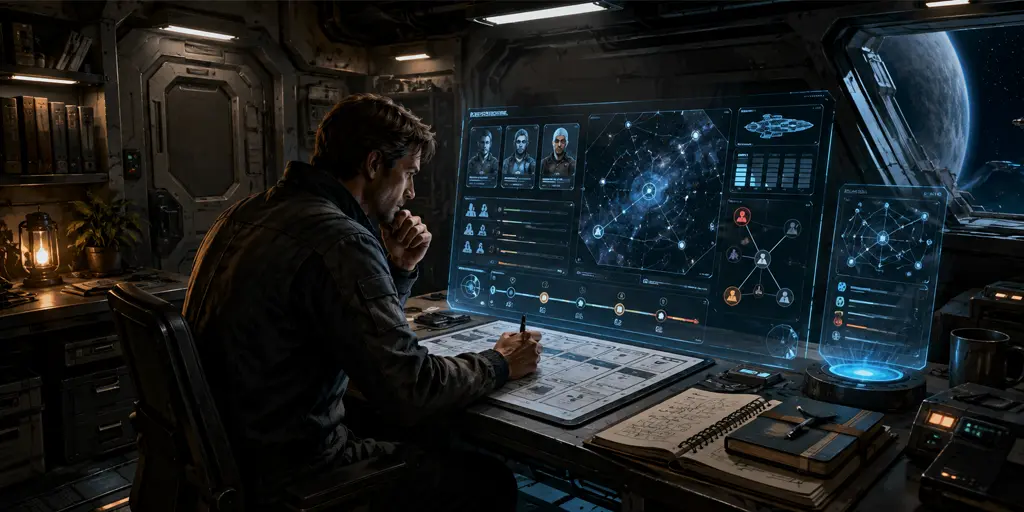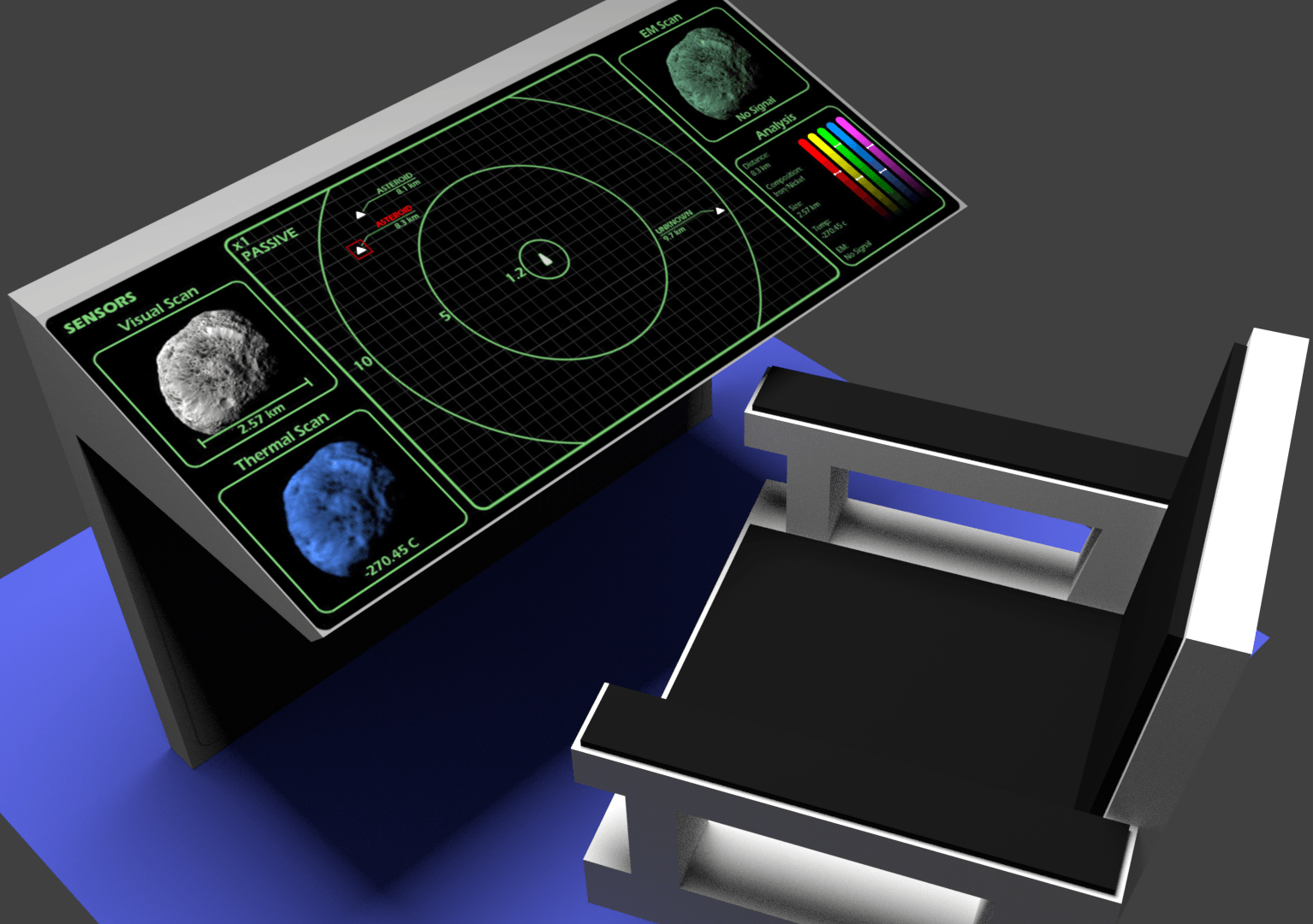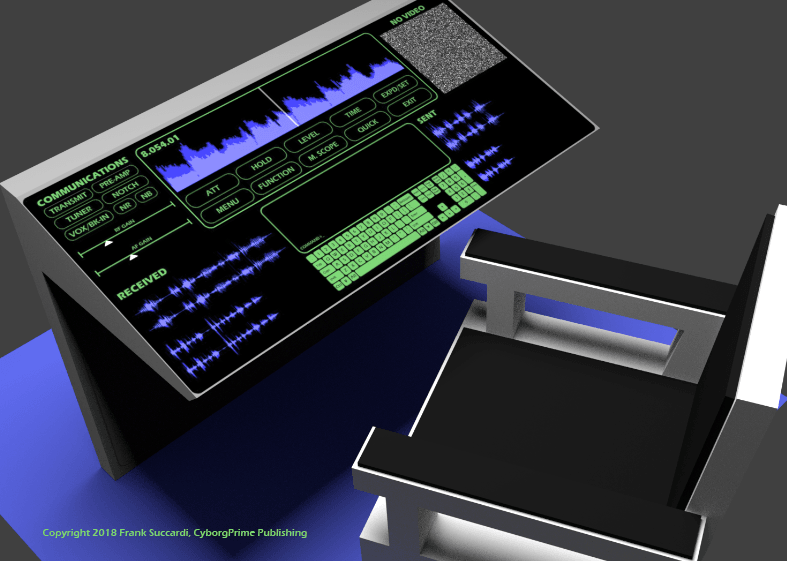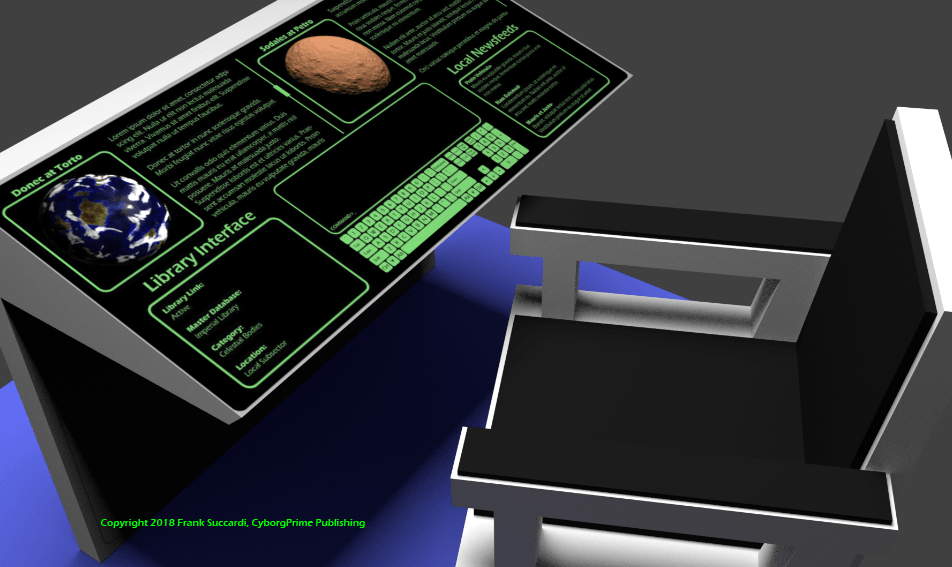
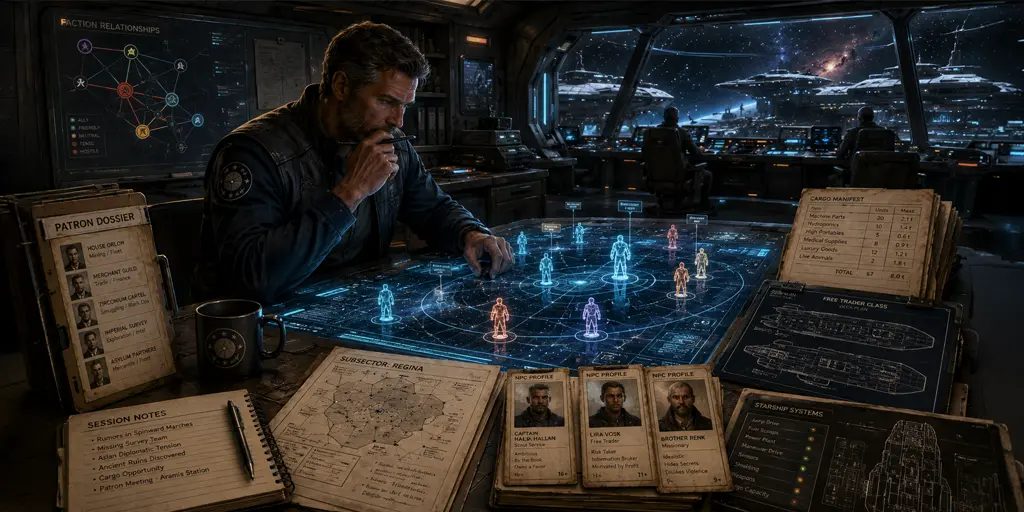
Prepare a Traveller RPG session around pressure, choices, and consequences that remain useful even when the players ignore the path you expected.
A Traveller referee does not need to predict every decision or script every scene. The most reliable preparation creates a playable situation: something is happening, someone wants a result, the crew has several reasonable ways to respond, and the outcome changes what happens next.
This Traveller referee guide gives you one complete method for building that kind of session. Use the core framework and worked example first, then follow the specialist routes when you need deeper help with missions, ships, worlds, tools, or faster preparation.
Start Here: What Does Your Next Session Need?
Begin with the problem closest to your table. You do not need to use every workshop station before play.
- I need a playable situation: start with the Traveller Situation Framework below.
- I need a complete mission: use the framework, then continue to the Traveller Mission Design guide.
- I need an NPC or faction: prepare what they want, what they can offer, and what they will do next.
- I need a ship or world complication: choose a detail that changes the crew’s choices, costs, timing, or relationships.
- I need faster preparation: use the 15-minute workshop near the end or the 30-minute Traveller session-prep method.
- I need to recover a stalled session: reveal useful information, advance a faction, or introduce pressure that demands a decision without dictating the answer.
The goal is not to finish a document. The goal is to arrive at the table with enough material to support informed decisions.
What a Traveller Referee Actually Prepares
The referee prepares the universe’s response, not the players’ solution. That work usually has five parts:
- Present the situation. Show the crew what is happening and why it matters now.
- Represent the universe. Play NPCs, factions, institutions, environments, and consequences according to their motives and limits.
- Clarify choices. Give players enough information to understand meaningful options and likely risks.
- Resolve uncertainty. Use the rules, judgment, and random results when the outcome is genuinely uncertain.
- Advance the campaign. Let the result change relationships, resources, opportunities, and future pressures.
Campaign expectations established before play still matter. Tone, acceptable themes, character goals, and the kind of Traveller game everyone expects will shape which situations are appropriate. Within those boundaries, prepare flexible pressures rather than fixed scenes.
The Traveller Situation Framework
A playable situation needs six elements. This table gives you the practical question to answer for each one.
| Situation Element | Referee Question |
|---|---|
| Pressure | What will worsen, expire, arrive, or act if the crew delays? |
| Location | Where does this happen, and how does that place affect decisions? |
| Opposition | Who or what resists the crew, and what does it want? |
| Complication | What makes the obvious approach costly, uncertain, or morally difficult? |
| Choice | What different approaches can the players reasonably identify? |
| Consequence | How will action, refusal, delay, success, or failure change the campaign? |
Write one or two sentences for each element. If you cannot identify multiple plausible choices, add information or revise the pressure. If you cannot identify a consequence, the situation may not matter enough yet.
How the Situation Becomes a Campaign
The campaign grows through a repeating sequence: Situation → Pressure → Information → Choice → Consequence → Reaction → New Situation.
This cycle is useful because it does not require a planned story. The crew’s choices create the material that matters next. Your preparation becomes a set of moving parts rather than a stack of scenes that only work in one order.
Worked Example: Restricted Medical Cargo
A remote settlement needs medical supplies that local authorities have restricted. A patron offers the crew good pay to deliver the cargo before an outbreak becomes worse. The cargo is legal elsewhere, but an official inspection could lead to seizure, fines, detention, or political trouble.
Here is the same situation through the six-part framework.
| Framework Element | Restricted Medical Cargo Example |
|---|---|
| Pressure | The settlement’s need is growing, and the delivery window is closing. |
| Location | A controlled port where inspections, permits, and local contacts matter. |
| Opposition | Customs officials enforcing the restriction, plus anyone benefiting from the shortage. |
| Complication | The patron has not explained why the cargo was restricted or who arranged the local handoff. |
| Choice | Seek a permit, conceal the cargo, negotiate with an official, investigate the restriction, change the delivery point, or refuse the job. |
| Consequence | The result changes the settlement’s condition, the crew’s legal exposure, and their relationships with the patron and local factions. |
The table is preparation, not a hidden script. The players may pursue an approach you did not list, but the pressure, opposition, and motives still help you judge how the world responds.
What the Referee Prepares
- The patron’s stated reason for the delivery and one fact being withheld.
- The settlement contact’s immediate need and preferred handoff.
- The customs official’s duty, personal concern, and room for discretion.
- The reason for the restriction.
- The cargo’s condition and any handling problem.
- What changes if the crew delays.
What the Referee Does Not Prepare
- A required route through the port.
- A mandatory customs encounter.
- A single correct answer to the restriction.
- A fixed order for investigation, negotiation, deception, or delivery.
- A scene that assumes the crew accepts the patron’s terms.
Three Likely Approaches
- Work through the system. The crew investigates the rule, seeks legal authority, or finds an official willing to grant an exception.
- Avoid the system. The crew conceals the cargo, uses another landing site, creates a diversion, or recruits a local smuggler.
- Change the situation. The crew renegotiates the job, exposes the shortage, pressures the patron, or refuses delivery while helping the settlement another way.
Consequences That Seed the Next Session
- Success: the settlement receives the supplies, but the crew earns the attention of an official, rival supplier, or local faction that wants an explanation.
- Refusal: the patron turns elsewhere, the shortage worsens, and a later contact asks why the crew walked away.
- Partial failure: some cargo arrives, some is seized, and the crew must decide whether to recover it, settle the legal problem, or protect the people who helped them.
Each result creates new relationships and pressures. That is the bridge from a single job to an ongoing Traveller campaign.
Turn the Situation Into a Mission
A situation becomes a mission when someone asks the crew to pursue a result. Keep the first pass compact:
- Source: who presents the opportunity?
- Stated objective: what does the source say needs to happen?
- Hidden truth: what important fact is missing, misunderstood, or deliberately withheld?
- Opposition: who resists the objective, and why?
- Complication: what changes the cost, timing, information, or relationships?
- Reward: what makes accepting the job worthwhile?
- Consequence: what changes if the crew succeeds, fails, delays, or refuses?
That is enough to start. For a fuller mission-building system, use the Traveller Mission Design hub. For a practical source of jobs, see how to build a Traveller patron job players care about. Advanced missions can add competing objectives, hidden objectives that preserve player agency, and failure consequences that change the campaign.
Do not expand every mission element equally. Prepare the parts most likely to create decisions, then let play reveal which details deserve more attention.
Prepare People Who Want Something
NPCs and factions keep a sandbox moving because they act for reasons of their own. You need motives and next actions more than long biographies.
NPCs
For an important NPC, prepare six short notes:
- Want: the result the NPC is trying to obtain now.
- Offer: what the NPC can provide to the crew.
- Secret: information the NPC is hiding or does not understand.
- Leverage: a resource, relationship, authority, or vulnerability that affects negotiation.
- Connection: how the NPC relates to another person, faction, place, or past event.
- Next action: what the NPC will do if the crew does nothing.
These notes are enough to improvise a conversation while keeping the NPC consistent. Add appearance, voice, or history only when it will help at the table.
Factions
For each active faction, prepare:
- Goal: what change it wants.
- Resource: what it can spend, deploy, promise, or withhold.
- Fear: what loss it is trying to prevent.
- Current problem: what demands attention now.
- Relationship to the crew: what the faction believes the crew has done or may do.
- Next move: what happens if nobody interferes.
After a session, choose the faction most affected by the crew’s decision and advance one move. That single reaction often provides enough pressure for the next session.
Use Complications to Create Choices
A complication should change the available choices, costs, information, or relationships. It should not simply cancel progress.
This comparison helps separate productive pressure from obstacles that make player decisions feel irrelevant.
| Problem | Better Referee Use |
|---|---|
| The required contact is unavailable. | Reveal why the contact disappeared and provide several ways to locate, replace, or work around them. |
| A permit is denied. | Show the cost of appeal, the official’s concern, and the alternatives created by the denial. |
| The ship develops a fault. | Force a choice among time, money, risk, favors, or reduced capability instead of stopping the mission. |
| The crew fails to obtain information. | Provide the essential fact, but attach uncertainty, delay, exposure, or a worse negotiating position. |
When adding a complication, ask what new decision it creates. If the answer is only “try the same thing again,” revise it.
Use the Ship and the World as Active Pressures
Locations matter when they change decisions. A starship and a world are not background decoration; each can shape what the crew can attempt and what it will cost.
The Ship
A ship can generate pressure through debt, maintenance, cargo commitments, passengers, inspections, repairs, ownership disputes, and competing uses of limited space or time. Use these pressures selectively. The point is to create decisions, not to turn every session into accounting.
A useful ship problem offers alternatives: pay for a proper repair, accept a temporary fix, call in a favor, take a risky job, delay departure, or continue with reduced capability. For deeper coverage, use the Traveller starships and crew operations guide.
The World
World details matter when they affect permissions, prices, availability, movement, status, safety, or local expectations. Law, technology, government, scarcity, trade, and local needs should influence decisions the players can see.
Instead of preparing pages of description, choose two or three details that will matter during the current visit. The Traveller worldbuilding and subsector design guide provides a deeper route when the location itself needs more development.
Prepare the Next Consequence
The most useful end-of-session notes are not a transcript. Record the changes that will affect future decisions:
- What changed?
- Who noticed?
- Who benefited?
- Who lost?
- What obligation was created?
- What opportunity opened?
- What happens if the crew does nothing?
Then choose one or two reactions to advance before the next session. A patron may revise an offer, an official may begin an inquiry, a rival may exploit the result, or a community may ask for further help. Consequences should make the universe feel responsive without punishing players for making an unexpected choice.
Failure does not need to end the adventure. It can cost time, reduce options, expose the crew, damage trust, create debt, shift ownership, or place the objective in new hands. Use the Traveller failure and consequences guide when you need a deeper framework.
Prep Faster With Referee Tools
Tools support decisions; they do not run the session. Choose a tool when it removes repetitive work or gives you options you can quickly judge.
- Random result: break indecision or introduce an impartial uncertainty.
- Mission seed: create an initial pressure, patron request, or opportunity.
- NPC or contact: generate names, motives, roles, or connections to edit for campaign fit.
- Ship problem: introduce a decision about capability, timing, repair, cargo, or crew.
- Ship finances: clarify the consequences of debt, operating costs, or a proposed job.
- Travel timing: keep movement and deadlines consistent.
- Map or subsector: show routes, isolation, borders, and competing destinations.
- AI-assisted preparation: produce options, summarize notes, or test whether a situation contains meaningful choices.
Use the Traveller RPG tools and calculators index to find the verified tools appropriate to the task.
Use AI as a Preparation Assistant
AI can reduce preparation work, but the human referee remains responsible for campaign fit, fairness, tone, continuity, and final consequences. Treat generated material as options to evaluate, not decisions the table must accept.
Good Uses
- Generate several pressures or complications from one premise.
- Create variations on an NPC motive or faction reaction.
- Summarize campaign notes into table-ready points.
- Check continuity across names, promises, debts, and unresolved events.
- Suggest alternative consequences for success, refusal, delay, and partial failure.
- Organize scattered preparation into a usable session sheet.
Referee Responsibilities
- Remove material that does not fit the campaign.
- Verify rules references and factual claims before use.
- Protect player agency by avoiding generated “correct” solutions.
- Decide what information the players need to choose intelligently.
- Adjust tone and stakes for the people at the table.
- Make the final ruling and own the campaign consequences.
The CyborgPrime AI tools page is the appropriate route for human-referee preparation tools. Live automated play and human-referee assistance are separate workflows and should be evaluated separately.
Common Traveller Referee Mistakes
These mistakes usually come from preparing too much of the wrong thing or withholding information in the hope of creating drama.
| Common Mistake | Better Approach |
|---|---|
| Preparing a fixed sequence of scenes. | Prepare pressures, motives, locations, and consequences that still work in a different order. |
| Assuming the crew will accept the mission. | Decide what the patron and affected factions do after refusal or delay. |
| Writing complete biographies for every NPC. | Prepare wants, offers, secrets, leverage, connections, and next actions. |
| Using complications to block progress. | Use complications to alter choices, costs, information, timing, or relationships. |
| Treating failure as the end of the mission. | Let failure change position, resources, exposure, trust, or ownership while play continues. |
| Hiding essential information behind one successful roll. | Give players enough information to decide; use rolls to improve detail, speed, position, or certainty. |
The practical test is simple: can the players understand the situation, identify meaningful options, and see that their decision will matter? If not, improve the information before adding more plot.
Your 15-Minute Referee Workshop
Use this when you need a playable session quickly. Write short answers and stop when the situation is ready to respond to player choices.
- Write the pressure.
- Choose the location.
- Name the opposition.
- Add one complication.
- Identify at least three plausible choices.
- Write one consequence for action and one for delay.
- Prepare two NPC motives.
- Decide which faction moves next.
- Select one tool you may need.
- Stop preparing.
At the table, present the pressure and useful information, then ask what the crew does. After the session, record the consequence and the next reaction. That is enough to keep a Traveller campaign moving without predicting its story.
Frequently Asked Questions
What does a Traveller referee prepare?
Prepare a situation, the people and factions acting within it, enough information for meaningful choices, and likely consequences. Avoid scripting how the crew must solve the problem.
How much should I prepare for a Traveller session?
Prepare only enough to present the situation and respond consistently. One pressure, one location, active opposition, a complication, several plausible choices, and consequences for action or delay can support a full session.
What makes a situation playable?
A playable situation has understandable pressure, relevant information, more than one reasonable response, and consequences that make the decision matter.
What should happen when players ignore the mission?
Respect the decision. Advance the patron, opposition, or affected faction according to its motives, then show the resulting change. Refusal is a campaign event, not a mistake to correct.
How do I keep failure from ending the adventure?
Change the crew’s position instead of removing all options. Failure can cost time, money, trust, secrecy, equipment, access, or control while creating a new problem or route forward.
How do I recover a stalled session?
Reveal a useful fact, advance an active faction, bring a deadline closer, or ask the players what their characters are trying to achieve. Add pressure that requires a choice without prescribing the solution.
How should I prepare NPCs and factions?
Prepare motives, resources, relationships, and next actions. These details make improvisation easier and keep reactions consistent without requiring extensive biographies.
Can AI help prepare Traveller sessions?
Yes. It can generate options, variations, summaries, continuity checks, and alternative consequences. The human referee should verify the material, adapt it to the campaign, and make all final decisions.
Prepare Situations, Then Follow the Consequences
Better Traveller preparation does not require more prediction. Prepare the pressure, the people involved, the information players need, and the consequences that will follow their decisions. Let the crew choose an approach, let the universe react, and use that reaction to build the next situation.
For more specialist guidance, return to the Traveller RPG Blog or continue with the Traveller Mission Design guide.
Get More Tools for Your Next Traveller Session
Build your next situation with practical referee guidance, mission ideas, preparation methods, and campaign tools designed to reduce prep without reducing player choice.
No spam. Just referee tips, mission ideas, preparation methods, and CyborgPrime updates. Unsubscribe anytime.