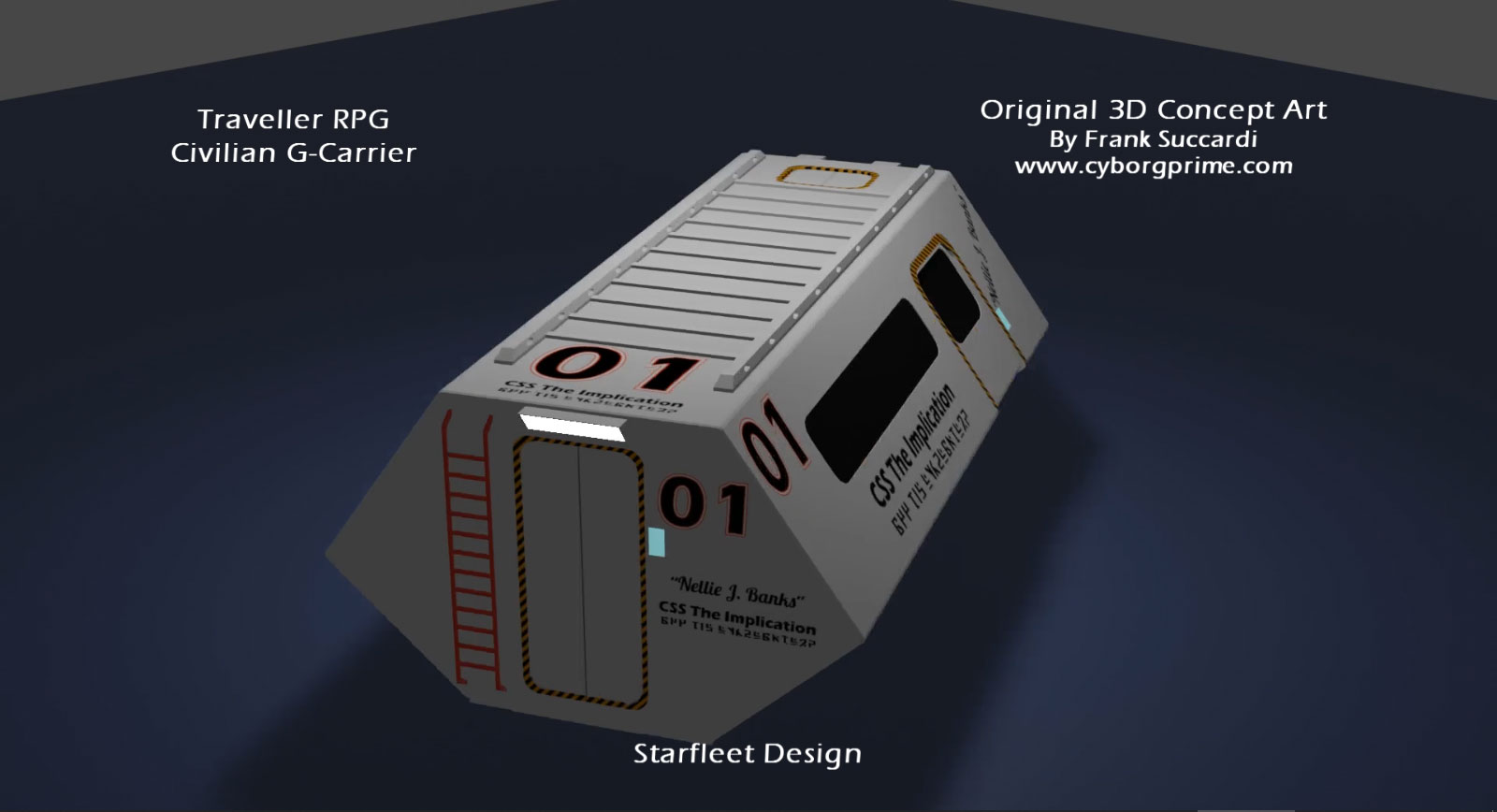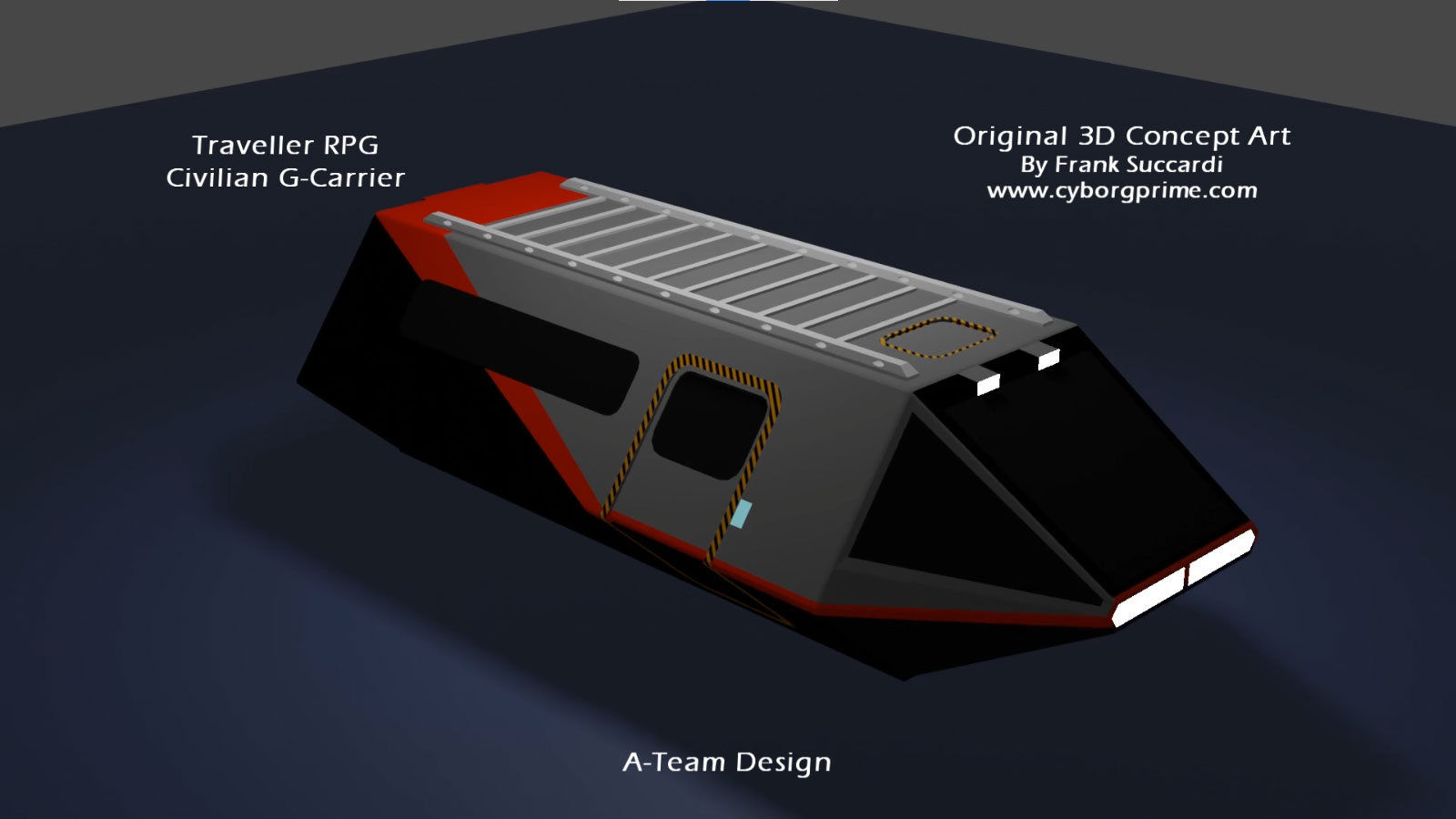

Start a Traveller RPG campaign without building the whole subsector first by giving the crew one ship, one debt, and three factions that all want something.
You Do Not Need the Whole Subsector Yet
Traveller feels big. That is part of the appeal. The map stretches across parsecs, worlds have trade codes and starports, patrons have secrets, and every jump can change the direction of the campaign.
That size can also intimidate a new Referee. It is tempting to prepare a whole subsector, a dozen worlds, a complete faction history, several trade routes, and a master timeline before the first session begins.
You can do that eventually, but you do not need it to start.
For the first few sessions, you need a campaign engine. That engine should give the crew a place to belong, a reason to move, and enough pressure that every job creates choices. A simple way to build that engine is:
- One ship that gives the campaign a home and a practical way to move.
- One debt that creates recurring pressure.
- Three factions that want different things from the crew.
That is enough to launch a playable Traveller RPG campaign without waiting until every world, patron, and political crisis is fully mapped.
Start With One Ship
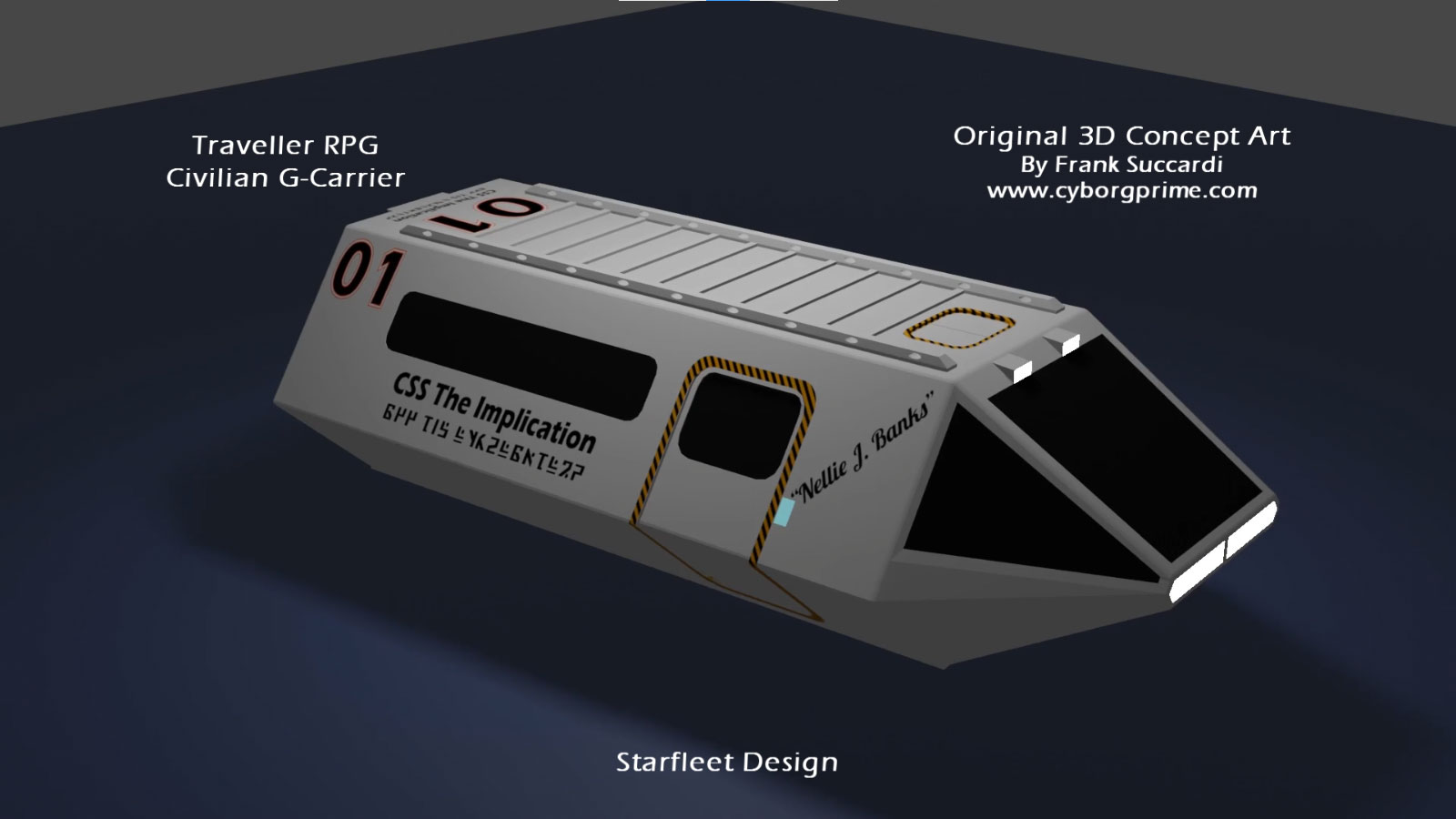
In Traveller, a ship is more than transportation. It is the crew’s base, livelihood, escape route, liability, social space, and problem generator.
A ship tells the players what kinds of problems they can plausibly take on. A free trader suggests cargo, passengers, payments, questionable deals, and port trouble. A scout ship suggests survey missions, courier work, rescue calls, and frontier mysteries. A lab ship suggests research contracts, hazardous discoveries, and corporate or academic pressure.
You do not need to fully detail every compartment, spare part, or system before play. Early in the campaign, focus on three questions:
- What does this ship allow the crew to do?
- What does this ship make difficult?
- Who has leverage over the ship?
| Ship Type | Campaign Feel |
|---|---|
| Free Trader or Far Trader | Trade, debt, passenger drama, speculative cargo, and route pressure. |
| Scout Ship | Survey missions, courier work, rescue calls, exploration, and frontier problem-solving. |
| Lab Ship | Research contracts, dangerous samples, mysteries, hazardous discoveries, and corporate or academic pressure. |
| Yacht | Nobles, diplomacy, intrigue, elite passengers, social leverage, and high-status complications. |
| Salvage or Utility Ship | Derelicts, repairs, recovery jobs, legal disputes, dangerous wrecks, and salvage claims. |
The ship should feel useful, but not safe. A ship that solves every problem too easily removes pressure. A ship that is always broken becomes frustrating. The sweet spot is a ship that works well enough to create opportunity and poorly enough to create trouble.
If you want a concrete ship-based starting point, the Far Trader Illustrated Deck Plans can help make the crew’s ship feel like a real place at the table.
Add One Debt
The debt is the pressure that keeps the campaign moving.
It does not have to be a literal ship mortgage, although Traveller makes that a very useful campaign tool. The debt can be financial, legal, criminal, political, social, personal, or professional. What matters is that it comes due again and again.
A good campaign debt should not be a single obstacle the crew clears in one session. It should create recurring decisions. Do they take the safe job or the better-paying dangerous one? Do they keep the ship legal or risk a shortcut? Do they protect their reputation or make the next payment?
| Debt Type | Play Pressure |
|---|---|
| Ship mortgage | The crew needs paying work on a schedule. |
| Repair debt | The ship flies, but one major system is unreliable. |
| Patron debt | Someone powerful expects repayment, loyalty, discretion, or future favors. |
| Legal debt | The crew owes fines, bonds, restitution, compliance, or proof of good behavior. |
| Criminal debt | A syndicate helped them acquire the ship and now wants favors. |
| Family or clan debt | A character’s home, family, clan, or community is at stake. |
| Imperial or corporate obligation | The crew’s license, charter, cargo, mission authority, or route access has strings attached. |
If you are using a ship mortgage as the campaign pressure, the Traveller Ships Mortgage Calculator can help turn that obligation into a usable table concern instead of a vague background detail.
The debt should be clear enough for the players to understand, but flexible enough for the Referee to use in different situations. It can become a payment deadline, a threatening message, a denied permit, an inspection, a suspicious patron, or a job the crew would rather refuse.
For campaign prep, write the debt in one sentence:
The crew must keep the ship operating while owing something specific to someone who can make their lives harder.
That one sentence is often more useful than three pages of background lore.
Create Three Factions
Three factions are enough to make the campaign feel alive without burying the Referee in prep.
You do not need to build a complete political atlas before the first session. You need three groups or people who can push on the crew from different directions. Each faction should want something, offer something, threaten something, and act when ignored.
The Patron, Rival, and Authority Triangle
- The Patron: Offers work, help, legitimacy, information, or resources.
- The Rival: Wants the same prize, route, contract, cargo, reputation, or opportunity.
- The Authority or Complication: Controls permits, law, customs, data, routes, territory, or consequences.
The Money, Trouble, and Law Triangle
- Money: The bank, megacorp, lender, trade guild, wealthy patron, or consortium.
- Trouble: Pirates, criminals, rivals, rebels, smugglers, competitors, or desperate locals.
- Law: Imperial officials, local government, port authority, scouts, military, or corporate security.
Do not write factions as static lore entries. Write them as active table tools. For each faction, answer these four questions:
- What do they want right now?
- What can they offer the crew?
- What can they threaten?
- What will they do if the crew ignores them?
That last question matters. Factions make the setting feel alive when they act without waiting for the players to ask about them. A lender changes the terms. A rival crew takes a contract. A port official delays departure. A patron withdraws protection. The world moves.
Turn the Setup Into the First Three Sessions
Once you have one ship, one debt, and three factions, you already have enough material for the first three sessions.
The goal is not to railroad the crew. The goal is to create a pressure cooker. The Referee sets forces in motion. The players decide what to do about them.
| Session | Core Situation |
|---|---|
| Session 1 | The crew receives a job that can cover the next payment, but accepting it puts them between two factions. |
| Session 2 | The job gets complicated by cargo, passengers, customs, repairs, bad information, or betrayal. |
| Session 3 | The third faction makes an offer, demand, accusation, or threat that changes what the campaign is really about. |
For example, the crew might accept a legal cargo job from a trade broker. On arrival, they discover the cargo is politically sensitive at the destination. A rival crew knows what they are carrying. The port authority can make the problem disappear, but only if the crew accepts a future obligation.
That is not a plot. It is a situation. The players can deliver the cargo, reroute it, sell it, expose it, hide it, bargain with it, or use it as leverage. Every choice gives the Referee material for the next session.
When the job depends on travel timing, jump clearance, or how long the ship spends in normal space, the Traveller RPG Ship Travel Time Calculator and Traveller 100D Calculator can help keep the route pressure practical.
Example Campaign Starter: The Leased Far Trader
Here is a compact setup you can steal, modify, or use as a model.
Ship
The crew operates a worn Far Trader leased under unfavorable terms. It is functional, but several systems are overdue for proper maintenance.
Debt
The crew owes monthly payments plus repair costs. Missing a payment will not immediately end the campaign, but it will trigger penalties, inspections, and pressure from the lender.
Faction 1: The Lender
A trade consortium technically controls the lease. It wants results, not excuses. It can offer contracts, cargo access, route information, and temporary leniency. It can threaten legal action, repossession, unfavorable refinancing, or loss of future work.
Faction 2: The Rival Crew
Another merchant crew works the same route and wants the same contracts. They are not automatically villains. They might underbid the crew, spread rumors, steal a client, rescue the Travellers later, or become dangerous if embarrassed.
Faction 3: The Port Authority
Local officials control inspections, berths, customs paperwork, departure clearance, and landing privileges. They can be helpful, corrupt, overwhelmed, hostile, or simply procedural at the worst possible time.
Opening Job
The crew is offered a time-sensitive delivery that would cover the next payment if completed on schedule.
Complication
The cargo is legal at the point of origin but politically sensitive at the destination. The rival crew knows enough to interfere, and the port authority may delay departure unless the paperwork is perfect.
Player Choice
The crew can deliver the cargo, reroute it, investigate it, dump it, hide it, expose it, sell it, or use it as leverage. Every option creates consequences.
What Not to Prep Yet
One of the hardest Referee skills is knowing what not to prepare.
For the first few sessions, avoid spending too much time on material that may never reach the table. You probably do not need:
- A complete write-up of every world in the subsector.
- A full hierarchy for every faction.
- Every NPC written in advance.
- Detailed trade economics for every route.
- A fixed plot arc.
- A predetermined villain reveal.
- A metaplot the players cannot affect.
Instead, prepare the pieces most likely to matter next session:
- The next port.
- The next payment deadline.
- Three faction moves.
- One job offer.
- One complication.
- One consequence from the crew’s last decision.
This keeps your prep close to the table. Traveller can absolutely support deep setting work, sector politics, long trade routes, and major campaign arcs. But those things become stronger when they grow out of play instead of replacing play.
Traveller Campaign Starter Worksheet
Use this worksheet before your first session or between sessions when you want to refocus the campaign.
- What ship does the crew have access to?
- Who owns it legally?
- What does the ship let the crew do?
- What is the debt or obligation?
- When does pressure come due?
- Who offers the first job?
- Who benefits if the crew fails?
- Who controls the route, port, license, or law?
- What is the first cargo, passenger, mission, or mystery?
- What makes it more complicated than it first appears?
- What happens if the crew ignores the job?
- What happens if they succeed too loudly?
If you can answer those twelve prompts, you have enough to begin. The answers do not need to be perfect. They need to be playable.
Use the Framework at the Table
At the end of each session, update the same three campaign parts.
- The ship: What changed about its condition, reputation, location, crew, cargo, or legal status?
- The debt: Did the crew reduce pressure, delay it, increase it, or trade it for a different obligation?
- The factions: Who was helped, harmed, embarrassed, ignored, or impressed?
This gives you a simple between-session prep loop. You do not have to predict the whole campaign. You only need to know how the pressure changes after the players act.
If you want more practical Traveller articles, tools, and referee resources, browse the Traveller RPG Blog.
Traveller Campaign Starter FAQ
How much of a subsector should I prepare before starting a Traveller campaign?
Prepare only what you need for the next few sessions: the crew’s ship, the debt or obligation creating pressure, three active factions, the next port, and one job that forces a choice. You can expand the subsector as play reveals what the Travellers care about.
Does a Traveller campaign need a ship?
No, but a ship is one of the easiest ways to give the campaign a shared home, a reason to travel, and a recurring source of problems. If the crew does not own or lease a ship, use another shared asset or obligation such as a patron contract, scout assignment, military posting, corporate charter, or frontier base.
What is the best first ship for a Traveller campaign?
A Free Trader or Far Trader is often the easiest starting point for a trade, debt, and patron-driven campaign. A scout ship works well for exploration and courier play. The best choice is the ship that creates the kinds of jobs, limits, and problems your table wants.
How many factions should I create before session one?
Three is enough. Create one faction that can offer work, one that creates rivalry or trouble, and one that controls law, access, permits, territory, or consequences. Add more factions later when the campaign needs them.
How do I avoid railroading the first few sessions?
Prepare pressures instead of outcomes. Give the crew a job, a debt, and factions with motives, then let the players decide how to respond. The Referee’s job is to make the situation move, not to force one correct solution.
Build Your Next Traveller Session
The one ship, one debt, and three factions framework works because it keeps the campaign focused on things players can immediately understand.
The ship gives them a place to belong. The debt gives them a reason to move. The factions make every job a choice instead of an errand.
Use the worksheet before your next session. Pick the ship. Name the debt. Create three factions that can help, threaten, bargain, and react. Then put a job in front of the crew and let the campaign start moving.
Get More Traveller Referee Tools
Starting a campaign is easier when you have a few practical tools ready before the players choose the one option you did not expect.
If this one ship, one debt, and three factions framework was useful, join the Traveller Referee Tools list. I’ll send you Traveller campaign prep ideas, referee tools, random tables, adventure prompts, and CyborgPrime updates you can use at the table.
Send me Traveller referee tools and campaign prep ideas.
No spam. Just Traveller referee tools, prep tips, random tables, adventure ideas, and CyborgPrime updates. Unsubscribe anytime.
You can also join me and other Traveller fans on the CyborgPrime Discord server.